
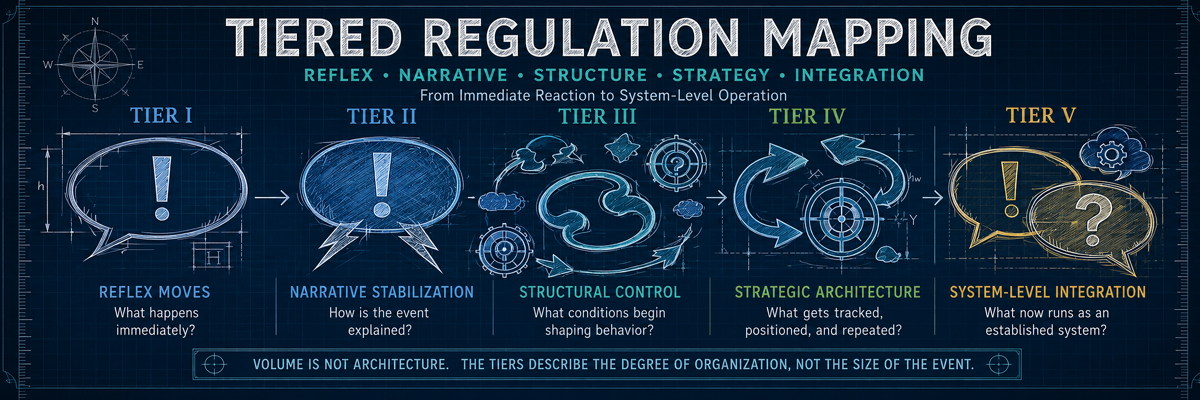
Regulation Tiers
Start Here
-
 Tier I — Reflex MovesImmediate stabilizersThis is where it starts. Fast reactions. No pause. Something happens — boom, response. You ever notice how the original issue disappears almost immediately? Yeah… that reaction? Start there →
 -
 Tier II — Narrative StabilizationPerception layerNow it’s not just reactions — it’s the story. Things get explained, reframed, softened… or flipped. You walk away thinking, “Wait… what actually just happened?” Wait… that didn’t add up, did it? →
 -
 Tier III — Structural ControlEnvironment layerThis is where it gets weird. Nothing is clearly wrong — but nothing feels right either. You’re not reacting to events anymore… you’re reacting to how things *feel over time*. Something feels off… follow that →
 -
 Tier IV — Strategic ArchitectureLedger cognitionNow there’s a pattern to it. Who gets attention. Who doesn’t. When it happens. You ever get that feeling like you’re in rotation… but nobody told you? Oh… you’re in a system now →
 -
 Tier V — System-Level IntegrationIdentity-integratedThis isn’t occasional anymore — it’s consistent. The system runs whether you question it or not. And if you’ve been in it long enough… it just feels like “this is how it is.” And now it just feels normal… right? →