
When the Facts Won’t Move, Move the Meaning
Meaning-shaping without altering the physical facts.
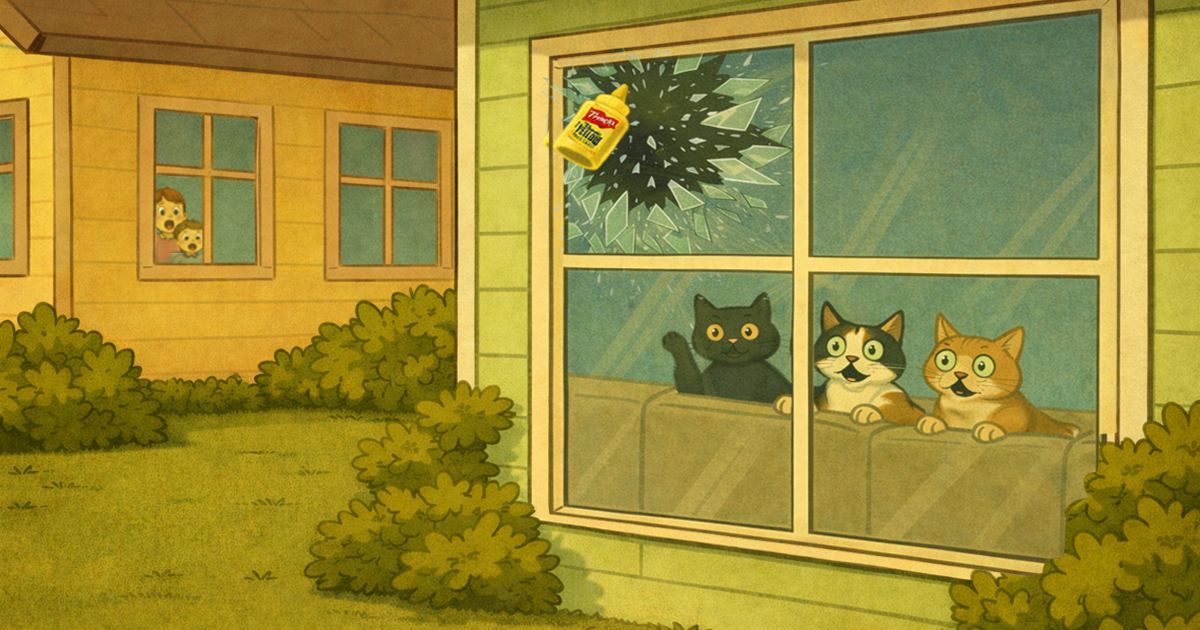
“I meant ketchup. Why would I need mustard? We had two.” – Narcy
How the Mustard Incident Began…
The night before, there had been meatloaf. A quiet dinner. Leftovers planned for the next day. And like most meatloaf dinners… ketchup had played a starring role. By morning, the bottle was empty. Now Narcy knew something important. Leftover meatloaf without ketchup… well, that simply wouldn’t do. So she did what many people do. She made a small list. Just a few things for Main to pick up. Tortillas. Vanilla ice cream. Chocolate syrup. And somewhere on that list… mustard. Which might seem like a minor detail. Unless, of course… the story later insists it was ketchup.
Five Ways Narcy Rewrites the Mustard Incident
The structure cannot change. The bottle went through the glass. The ketchup bottle ran empty during the meatloaf dinner. The shopping list shows “mustard” checked off. The neighbors heard the crash. The police may document the scene. The glass remains broken. The structure is fixed.
So Narcy does not alter structure. She alters interpretation.
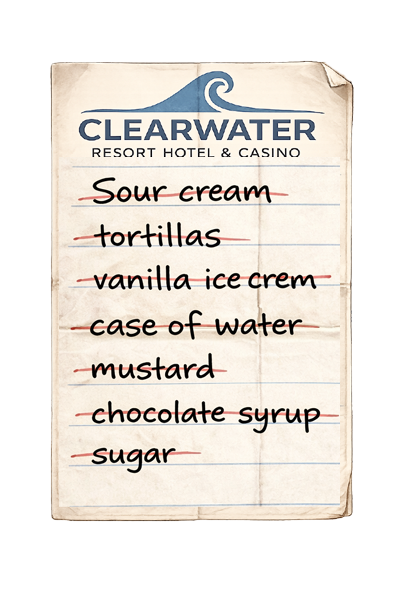
This is the essence of perception-control . The physical facts remain untouched. The broken window. The condiment bottle. The shopping list.
What changes is what those facts are allowed to mean.
1. Narrative-Control
The list says “mustard.” The refrigerator was out of ketchup. The structure appears simple. But structure is not where Narcy operates. By reframing what the list was supposed to mean, she preserves narrative-control . The written word becomes secondary to her intention. The event becomes proof that Main should have understood what she really meant.
2. Gaslighting with Manufactured-Ambiguity
Mustard. Ketchup. Both condiments. Both connected to meatloaf. By blurring the difference between the two, Narcy introduces manufactured-ambiguity and leans into gaslighting : “You saw two mustards in the fridge yesterday.” Now Main must defend perception instead of address impact.
3. Preemptive-Victimhood
Before anyone can ask why a bottle flew, she reframes herself as misunderstood. “I finished the ketchup yesterday. He helped me. He knew.” This is preemptive-victimhood . The broken glass becomes emotional neglect. Her outburst becomes reactive frustration.
4. Accountability-Evasion through Blame-Flipping
The question is not “Why was the bottle thrown?” The new question becomes, “How could you not know?” That pivot is accountability-evasion paired with blame-flipping . The structural act (throwing) fades. The interpretive failure (his listening) dominates.
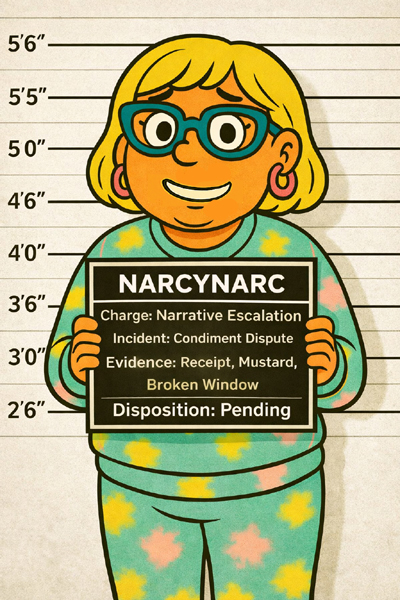
5. Image-Management Across Audiences
- To Main: it was perfectly clear.
- To Mom: she was stressed.
- To Daughter: he never listens.
- To Neighbors: it was an accident.
- To Police: it slipped... case dismissed.
This is image-management layered with rewriting-history . Each audience receives the same structure — broken glass, condiment confusion — but a customized emotional framing.
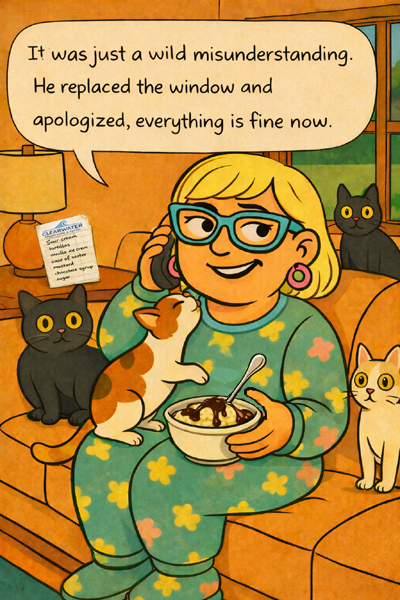
Same facts. New framing. The structure never changed — only the explanation did.

New window… same story. The structure resets, but the narrative survives.
In situations like this, two layers exist simultaneously. The structural constant: the window is broken. The interpretive variable: why it broke. When the structure cannot move, the narrative becomes the battlefield.
When the structure stays the same but the explanation keeps shifting, something unusual is happening. The conversation is no longer about the event. It has become a spin cycle.
“The facts didn’t change. Your understanding finally did.” – Narcy